How to write a snag list contractors act on
Why most snag lists generate phone calls
The typical snag list arrives as a long email, a Word document of paragraphs, or forty photos in a WhatsApp thread. The contractor cannot tell which photo belongs to which comment, which room "the bedroom" means, or which of the forty items are theirs. So they ring you. Every clarification call is a defect in the list, not the reader.
The rules below remove the reasons to ring. (They cover how to record; for what to look for, walk with the room-by-room snagging checklist.)
1. One issue per record
Not "make good decoration throughout second floor". One record per fault: what, where, one photo. Bundled items cannot be individually priced, assigned or closed, so they stay open until the last piece is done, and nobody can say what progress has been made. Ten small records close faster than one vague one.
2. Give every issue a number that never changes
IS-014 should mean the same crack in the same reveal in the first email,
the contractor's reply, the re-inspection and the final report. When a list
is renumbered (because items were deleted, resorted or pasted into a new
spreadsheet) every existing conversation about "item 14" silently breaks.
Stable references are what let two people discuss work they are not standing
in front of.
3. One photo per issue, marked up
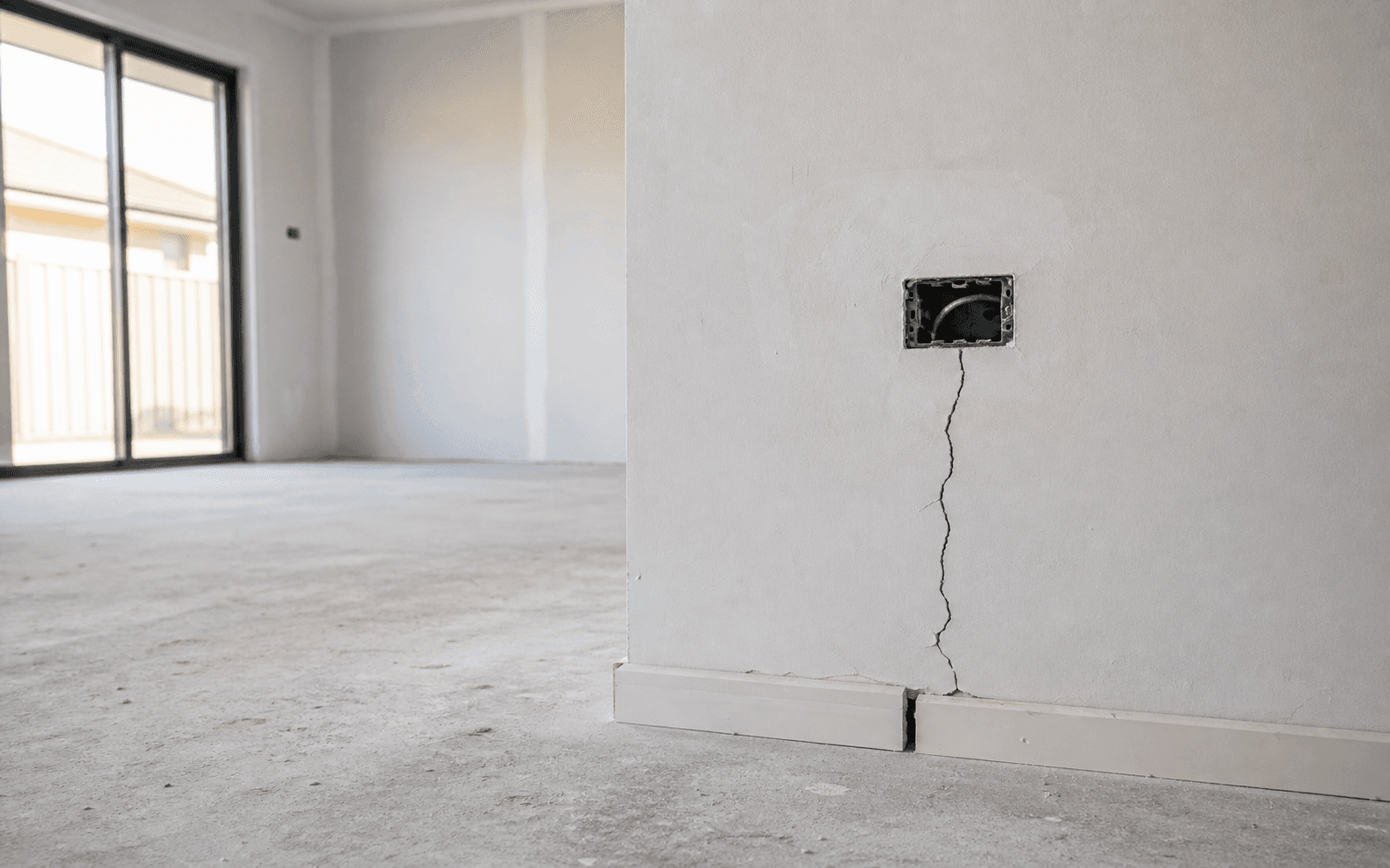
A photo proves the issue exists and shows its condition on the day. Marking it up (a ring around the crack, an arrow to the missed mastic) removes the "can't see anything wrong in this picture" reply. Two habits worth keeping:
- Shoot from where a person would stand to do the work, wide enough to recognise the location, then let the markup point at the fault.
- Keep the original photo unaltered underneath the markup. If condition is ever disputed, you want the untouched image.
4. Locate it like you're directing a stranger
"Plot 12 → Bedroom 2 → window reveal, left side." Building, floor, room, element, in that order, using the names on the drawings, not the names the site has invented. If two bedrooms could be "the back bedroom", your location is not finished. The test: could someone who has never walked the building find it from the words alone?
5. Describe the fault and the required action
"Door binds on frame, ease and adjust" beats "door issue". A good description states what is wrong and what done looks like, in trade language, without adjectives: cracked, missing, loose, scratched, incomplete. Skip severity essays: a priority flag on the few items that genuinely block handover says more than "URGENT" on half the list.
6. Assign a trade to every line, then send each trade its own list
An unassigned issue belongs to nobody, and nobody fixes it. Tag every record with its trade (Electrical, Plastering, Mastic, Decoration) and when you issue the list, filter it: the electrician receives their nine items, numbered and photographed, and nothing else. Sending everyone the full document means every trade reads sixty items to find their nine, or more usually doesn't.
7. Keep the walk order, and close out on the same record
A list in walk order is a route: the joiner retraces your steps instead of criss-crossing three floors alphabetically. And when work is done, resolve the original record: after photo alongside the before, status moved to resolved, same number. The final report then tells the whole story: raised, fixed, evidenced: exactly the record close-out at practical completion needs. A fresh list for the re-inspection throws that history away.
The one-line test
Before you issue the list, pick a record at random and ask: could the contractor price it, find it, fix it and prove it fixed, without calling me? If yes for every line, the list is done.
Where Snagwalk fits
These rules are Snagwalk's defaults, not extra discipline: every issue gets one photo and a stable ID in walk order; location and trade are recorded where you stand; per-trade lists and PDF or CSV reports are generated from the records you already made, offline if need be. Recipients need no app and no account.