What is snagging? A plain-English guide
The short answer
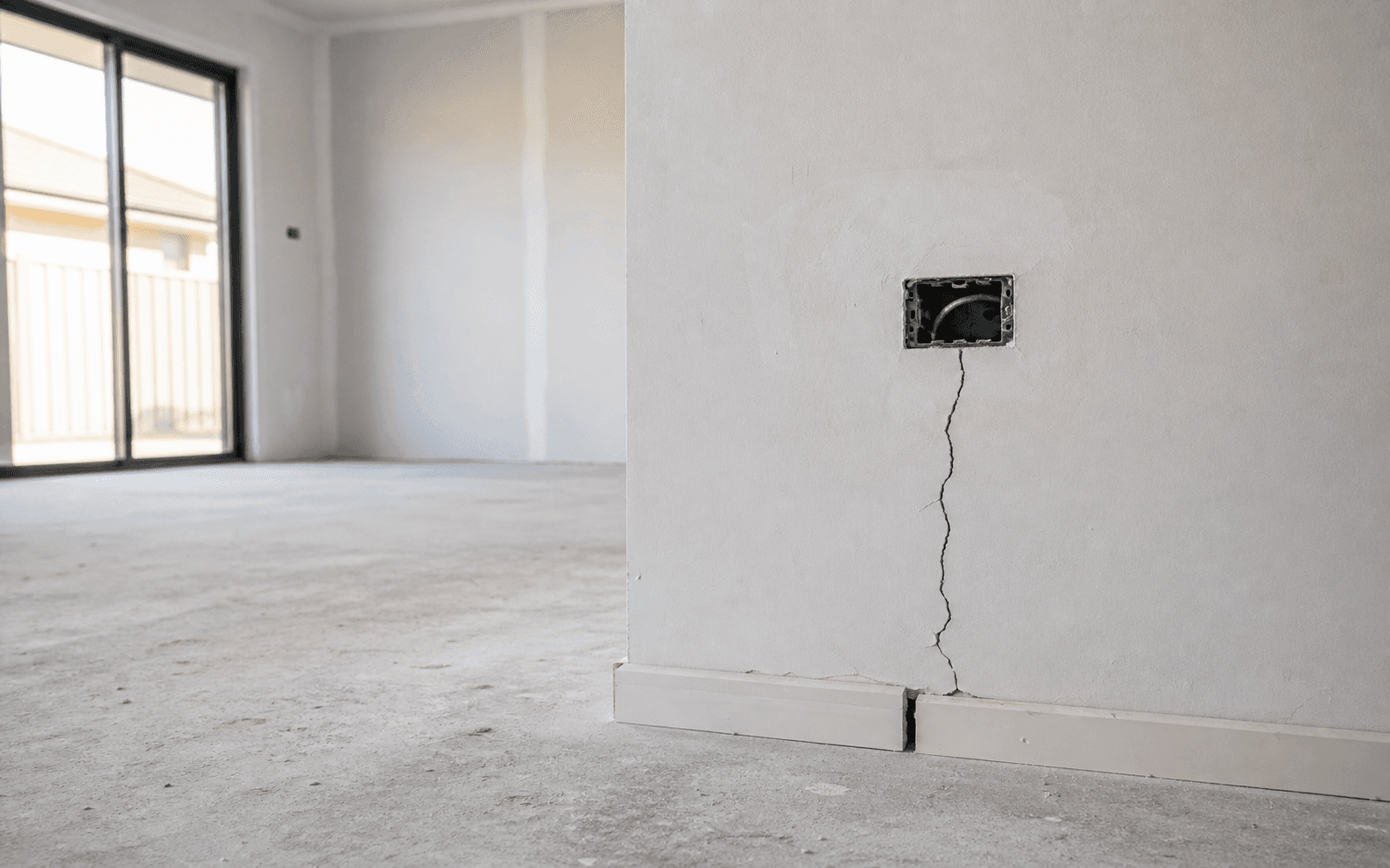
A snag is a small defect or unfinished piece of work in a building, usually cosmetic, occasionally functional. A scratched worktop, a door that catches its frame, paint missed behind a radiator, a cracked tile, a socket hanging loose.
Snagging is the process of walking the building, finding those defects and recording them in a list (the snag list) so the builder or the relevant trade can put them right. In the United States the same document is called a punch list; in some UK contracts it appears as a defects list or schedule.
What counts as a snag
A reasonable rule: a snag is anything that falls short of the finish or function you would expect from a competent tradesperson working to the specification. Common examples:
- Decoration: misses, runs, overpainted hinges, filler showing through.
- Joinery: doors binding, gaps at architraves, chipped skirting, ill-fitting kitchen units.
- Wet trades: cracked or lipped tiles, patchy grout, mortar snots on brickwork, uneven plaster catching side light.
- Windows and doors: scratched glass, stiff handles, missing trickle vents, failed seals.
- Services: loose sockets and switches, radiators not bled or not level, dripping traps, missing pipe clips.
- External: damaged turf, mortar-stained paving, blocked weep holes, incomplete mastic.
Larger problems (structural movement, widespread damp, a heating system that does not work) are defects in the fuller sense rather than snags. They belong on the record too, but flag them clearly: they are usually dealt with under different contractual or warranty provisions, and they deserve a specialist's attention rather than a line in a cosmetic list.
When snagging happens
On a construction project, snagging concentrates around practical completion: the contract administrator or clerk of works walks the works, lists what is incomplete or defective, and the contractor clears the list before (or immediately after) the certificate is issued. Snags found later, during the defects liability or rectification period (commonly six or twelve months) go on the schedule of defects at the end of that period. The exact mechanics depend on the contract, so check yours.
For a new-build home, the useful moment is between build completion and legal completion, if the developer allows access, and as soon as possible after moving in if not. Warranties such as NHBC Buildmark typically make the builder responsible for putting right defects reported in the first two years, so report early and in writing. Again: the warranty document, not this page, is the authority on what is covered.
Between the two sit landlords, housing providers and facilities teams, who run the same exercise under different names: void inspections, condition surveys, planned walk-rounds. The method is identical: walk, look, record, assign, chase, close out.
Who does the snagging
- The contract administrator, architect or clerk of works on a construction contract.
- A building surveyor or professional snagging inspector for a homebuyer, useful because they know what a competent finish looks like and inspect places owners forget, such as loft spaces and external rooflines.
- You, with a methodical eye. Most snags are visible to anyone who looks slowly and in good light. What separates a useful inspection from a frustrating one is not expertise so much as record-keeping.
What a good snag list contains
One line per issue, and every line answers four questions:
| Question | Example |
|---|---|
| Where is it? | Plot 12, Bedroom 2, window reveal |
| What is wrong? | Plaster cracked to left reveal, approx 300 mm |
| Who fixes it? | Plastering / making good |
| What does it look like? | One photo, marked up, taken from where you stood |
Give each issue a reference that never changes: IS-014 stays IS-014 in
every conversation, email and re-inspection until it is closed. Keep the list
in the order you walked, so the fixing trade can retrace your route rather
than criss-cross the building. And record the after state when work is done:
a before-and-after pair closes an argument before it starts.
For the full method, see How to write a snag list contractors act on. For what to look for room by room, see the room-by-room snagging checklist.
Where Snagwalk fits
Snagwalk is an iPhone app built around exactly this job: photograph each snag where you stand, mark up the photo, record the location and trade, and keep everything numbered in walk order. When the walk is done, the PDF or CSV report is built from what you already captured: nothing retyped, and it works with no signal. Recipients need no app and no account.